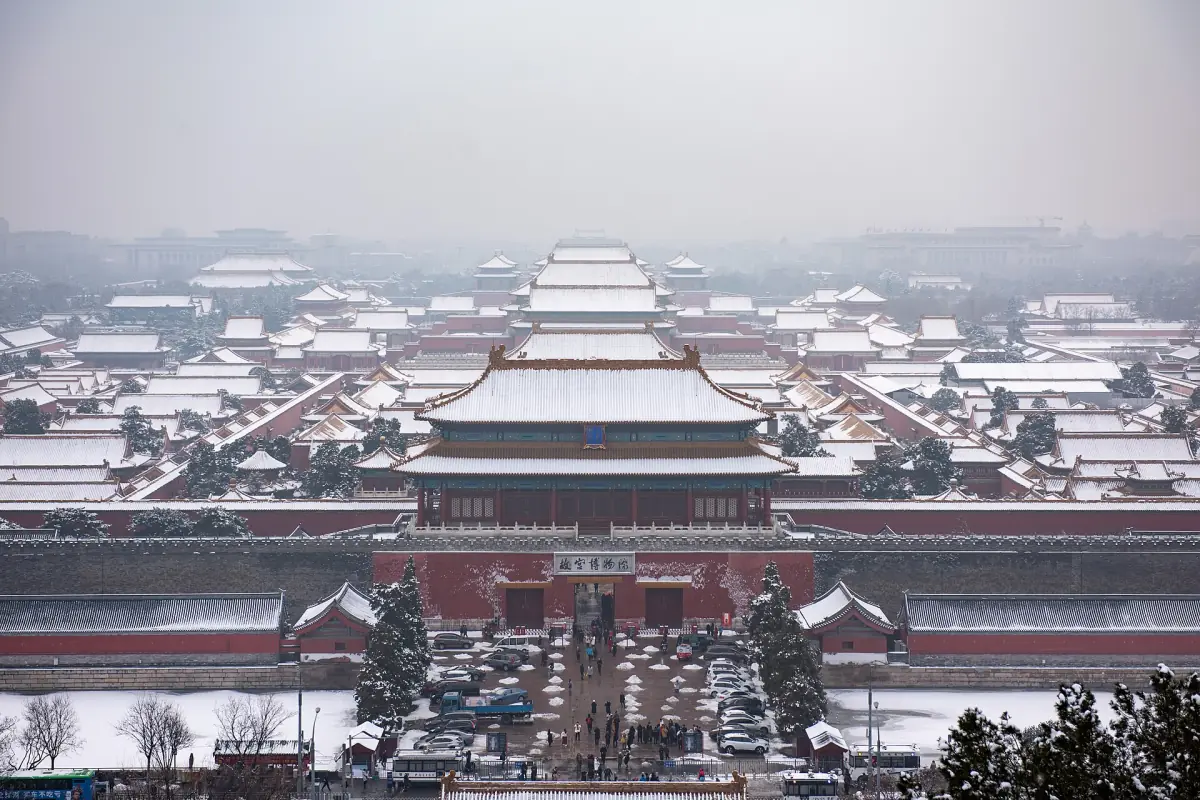
The Forbidden City in brief
The Forbidden City was the imperial palace of the Ming and Qing dynasties. Work ran from 1406 to 1420 under the Ming emperor Zhu Di, known by his reign name Yongle. Over the following centuries, 14 Ming emperors and 10 Qing emperors ruled from it, 24 in total.
Today the complex is a museum. Two names are in use. Forbidden City means the historic palace complex. Palace Museum means the museum founded inside it, with its historic interiors and art collections. This site is an independent guide to visiting both and is not run by the museum.
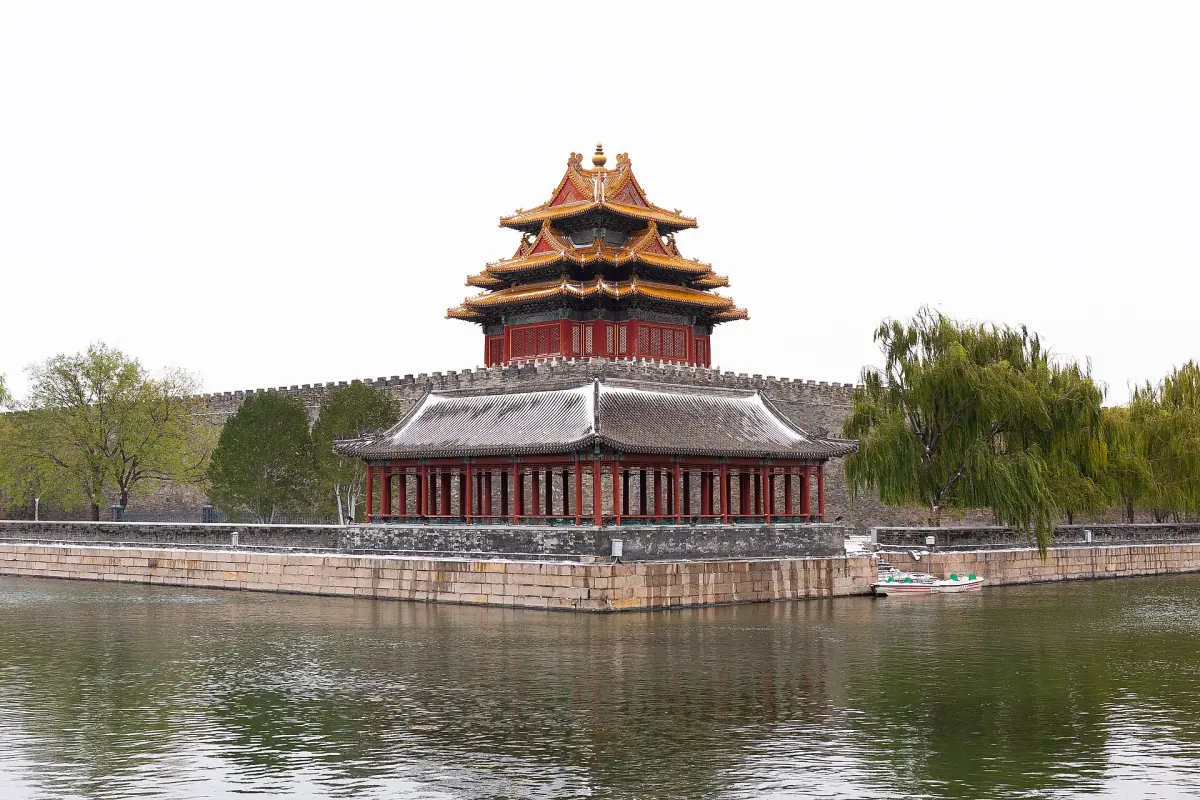
Timeline from 1406 to 1987
The dates that matter for a visit.
| Year | What happened |
|---|---|
| 1406 to 1420 | The palace is built under the Ming emperor Zhu Di (Yongle) |
| 1420 | First Hall of Supreme Harmony, later burned and rebuilt several times |
| 1644 | The Qing take over Beijing |
| 1695 | Rebuilding of the Hall of Supreme Harmony, which lasted about two years |
| 1912 | Abdication of Puyi, the last Qing emperor, on 12 February |
| 1924 | Puyi is expelled from the inner palace |
| 1925 | The Palace Museum opens on 10 October |
| 1987 | Beijing's palace is inscribed on the UNESCO World Heritage list |
Forbidden City tours with history
A good guide brings the dynasties to life. Compare guided visits and tickets with live prices and availability.
From the Ming to the Qing
Two dynasties, one palace.
The Ming builders
Zhu Di, the Yongle emperor, had the palace built between 1406 and 1420. The Hall of Supreme Harmony dates from the end of that period, 1420. The Ming dynasty gave the palace 14 emperors in all.
The Qing take over
In 1644 the Qing took over Beijing and with it the palace. They used it for the rest of the imperial period. Ten Qing emperors ruled from here, which brings the total to 24.
Fire and rebuilding
Several buildings burned over the centuries, and the Hall of Supreme Harmony was rebuilt more than once. The present hall goes back to the rebuilding of 1695.
Architecture of the halls →The end of imperial rule and the museum
The palace did not become a museum on the day the dynasty ended.
Puyi abdicated on 12 February 1912. He was allowed to stay in the inner part of the palace at first, and he was expelled in 1924, in connection with the coup of Feng Yuxiang. After that the remaining court collections were inventoried. On 10 October 1925 the Palace Museum held its opening ceremony in front of the Palace of Heavenly Purity (Qianqinggong).
This is why the Forbidden City is both a historic palace and a museum. The buildings are the monument, and the galleries inside them hold art and objects. The last emperor and the museum's galleries have their own guides.
World Heritage
UNESCO inscribed Beijing's palace in 1987 as part of the Imperial Palaces of the Ming and Qing Dynasties. The palace in Shenyang joined this serial site in 2004. These are two separate palaces in two cities, not two palaces inside Beijing.
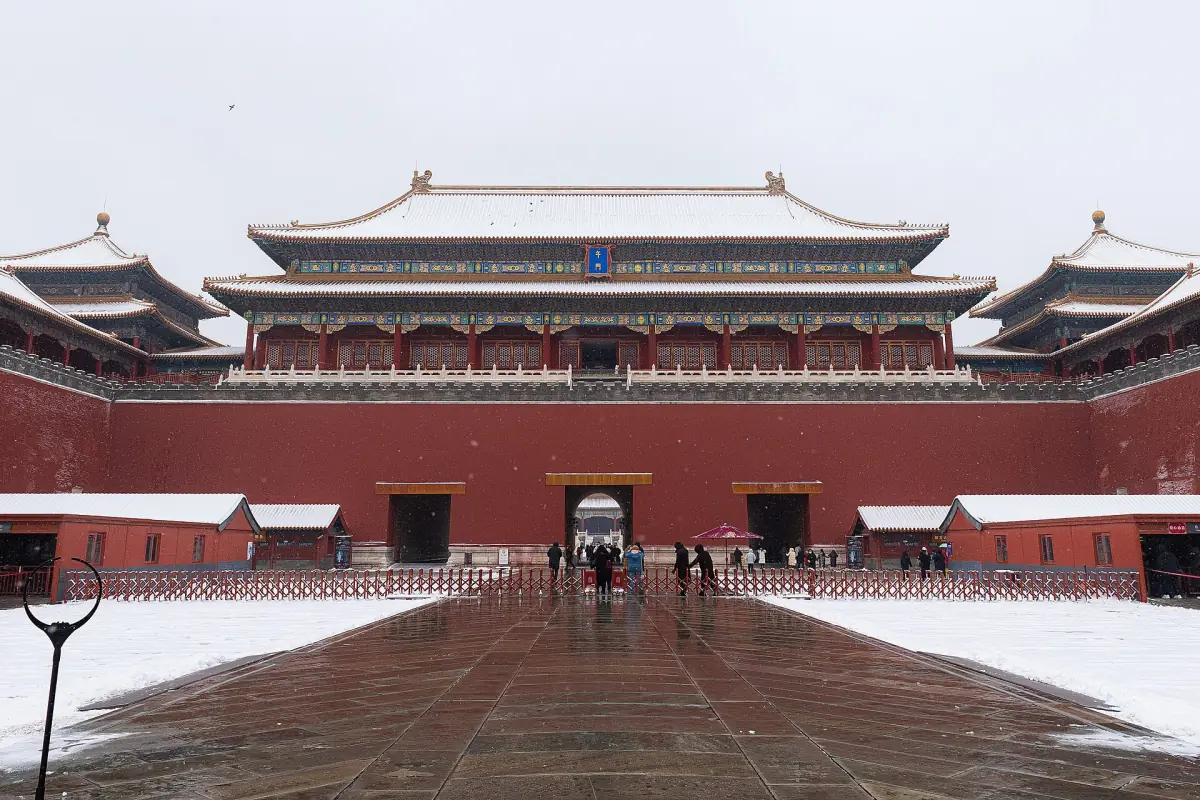
Seeing the history on a visit
Where the dates meet the route.
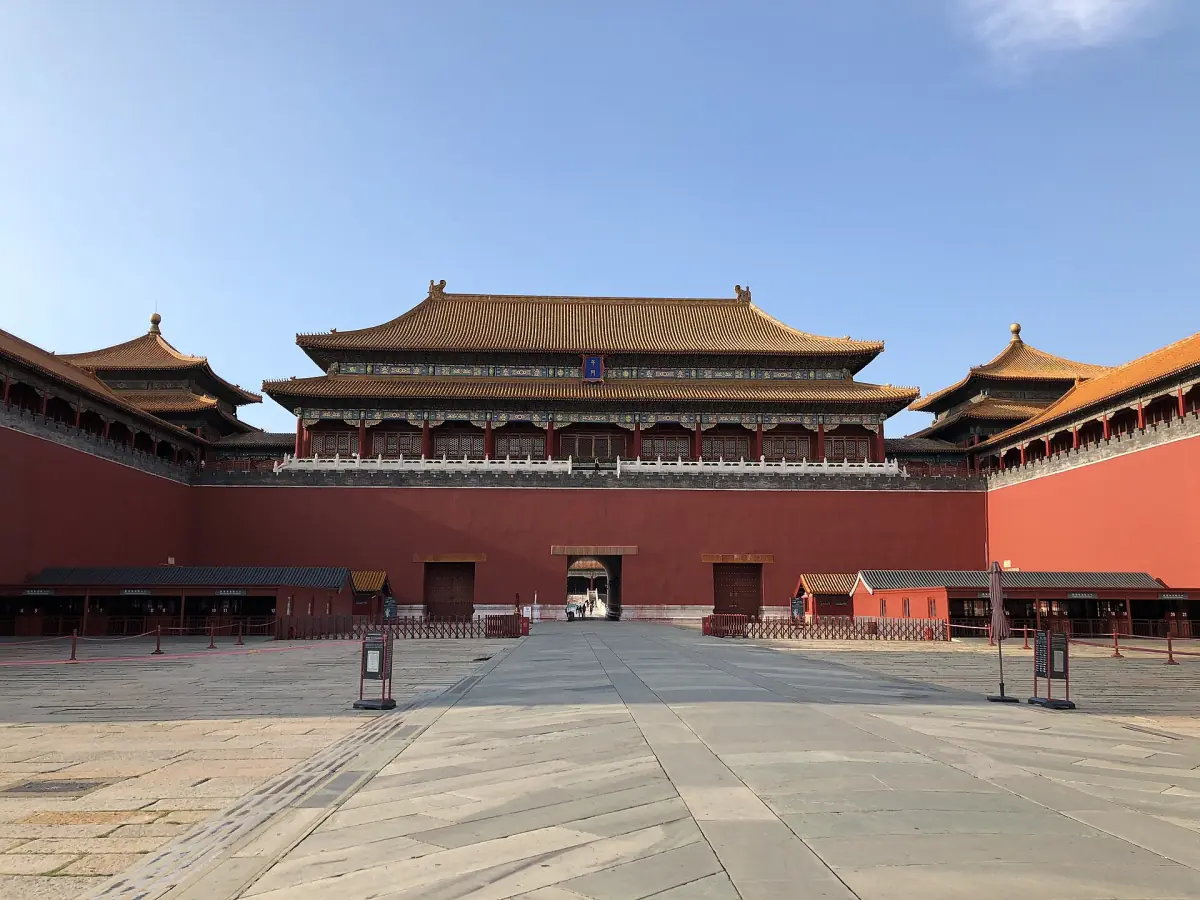
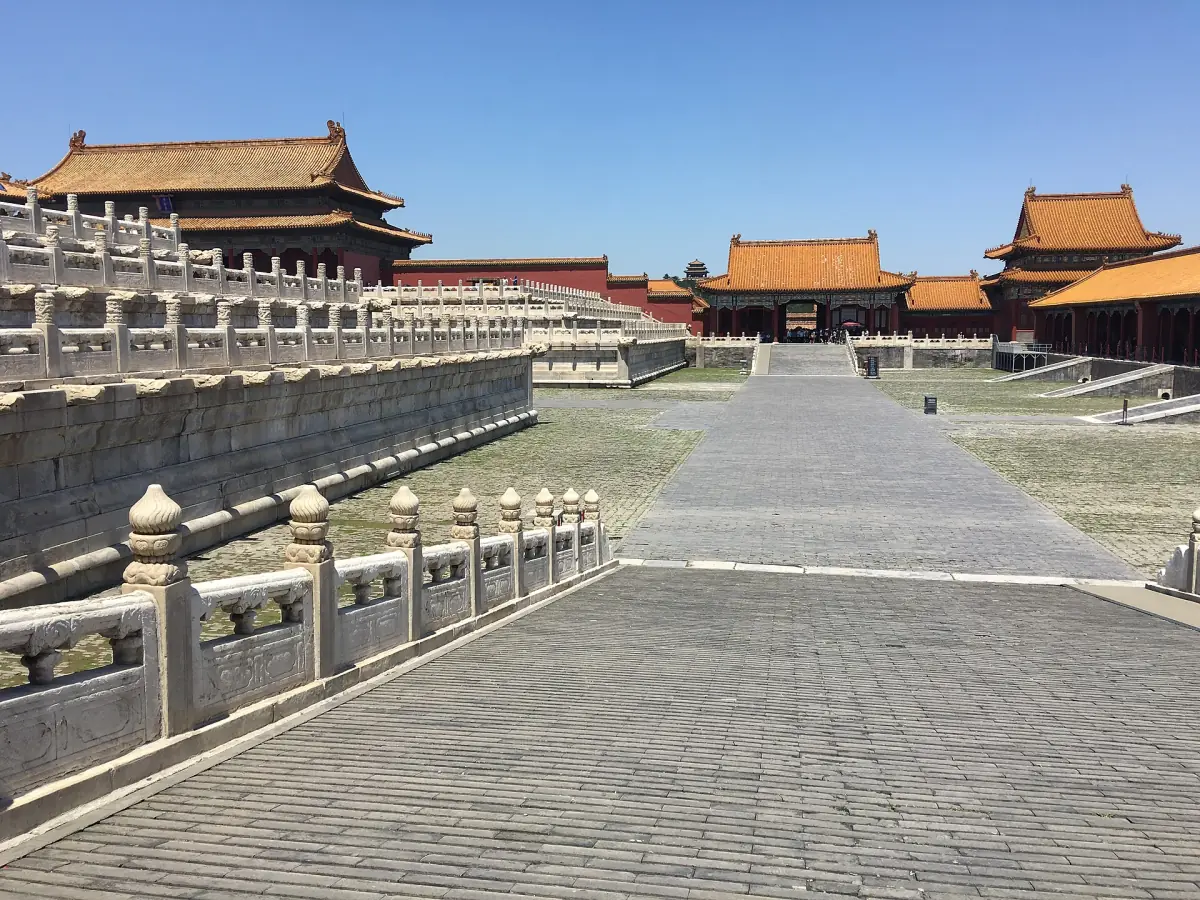
The Meridian Gate
The historic southern gate, and today the only entrance.
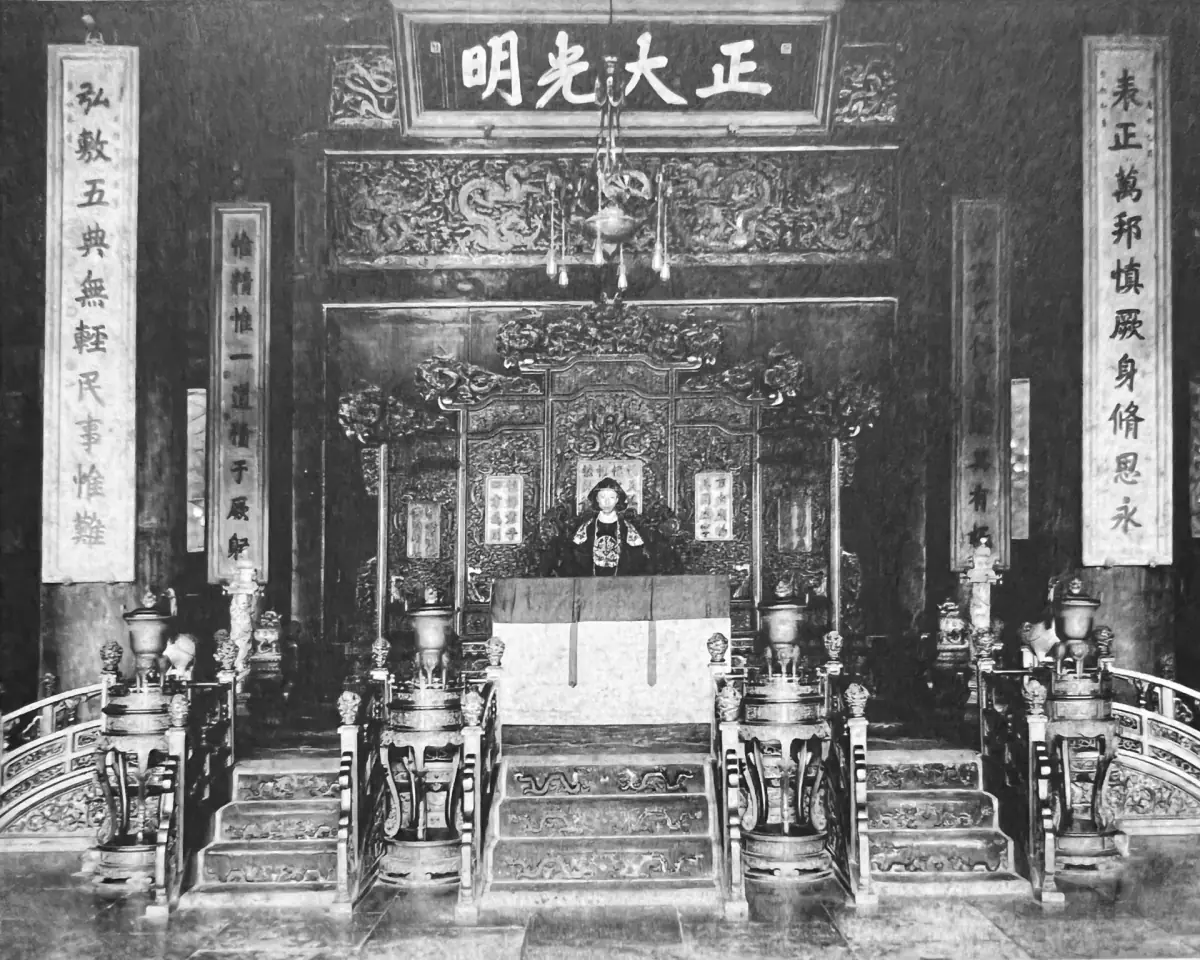
Puyi, the last emperor
The enthronement, the abdication and the years in the palace.
Forbidden City map and route
Walk the axis from south to north.
The Meridian Gate is the southern gate of the palace. The historic order of the gates runs Tiananmen, Duanmen, Wumen, then Taihemen and Qianqingmen. Tiananmen and Duanmen lie outside the palace on the approach, and the Meridian Gate is the palace's actual gate.
Practical notes for a history visit
What to know before you walk through the dynasties.
Reserve your entry
Tickets are booked online under your real name, starting 7 days before the visit at 8 p.m. Beijing time. Bring the original passport you booked with.
Tickets and reservation →Opening and closing
The palace opens at 8:30 a.m. and closes at 5 p.m. from 1 April to 31 October and at 4:30 p.m. from 1 November to 31 March. It is closed on Mondays apart from public holidays.
Opening hours →Some buildings are closed
Wuying Dian has been closed since 19 October 2026, and Yanxi Gong was closed from 1 September to 31 October 2026, with the reopening announced for 1 November 2026. A historic hall in a book is not always open on the day.
Forbidden City history: frequently asked questions
When was the Forbidden City built?
Between 1406 and 1420, under the Ming emperor Zhu Di, who is known as the Yongle emperor.
How many emperors lived there?
24 in total: 14 of the Ming dynasty and 10 of the Qing dynasty.
When did the Qing take over the palace?
In 1644, when the Qing took over Beijing.
When did it become a museum?
The Palace Museum held its opening ceremony on 10 October 1925, after Puyi had been expelled and the remaining court collections inventoried.
Is the Forbidden City a World Heritage site?
Yes. Beijing's palace was inscribed in 1987. The palace in Shenyang was added to the same listing in 2004.