One axis, two courts
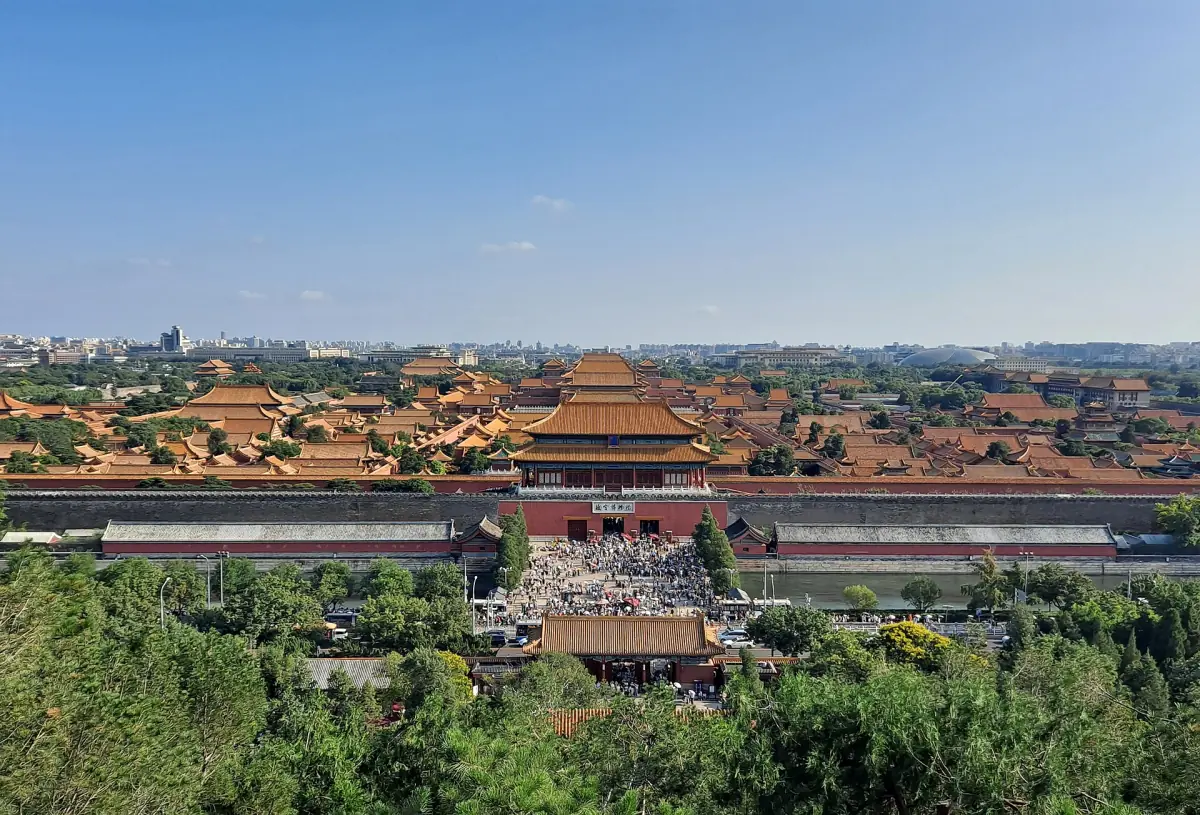
The palace follows a strict plan. A central axis runs from south to north, and the buildings stand in symmetrical pairs on both sides. The southern part is the outer court, used for ceremony and display. The northern part is the inner court, where the court lived.
You meet this plan on foot. After the Meridian Gate you cross the outer court with its three great halls. Then you pass into the inner court, with the residential palaces and the Imperial Garden at the far end. The route page shows the order of the stops.
The halls at a glance
Names in English and in Pinyin, with the court they belong to.
| Hall | Pinyin | Court |
|---|---|---|
| Hall of Supreme Harmony | Taihedian | Outer |
| Hall of Central Harmony | Zhonghedian | Outer |
| Hall of Preserving Harmony | Baohedian | Outer |
| Palace of Heavenly Purity | Qianqinggong | Inner |
| Hall of Union | Jiaotaidian | Inner |
| Palace of Earthly Tranquility | Kunninggong | Inner |
Behind the three inner buildings lies the Imperial Garden. East and west of the axis stand the eastern and western palaces.
Forbidden City tours with a guide
A guide helps you read the halls. Compare guided visits and tickets with live prices and availability.
Hall of Supreme Harmony (Taihedian)
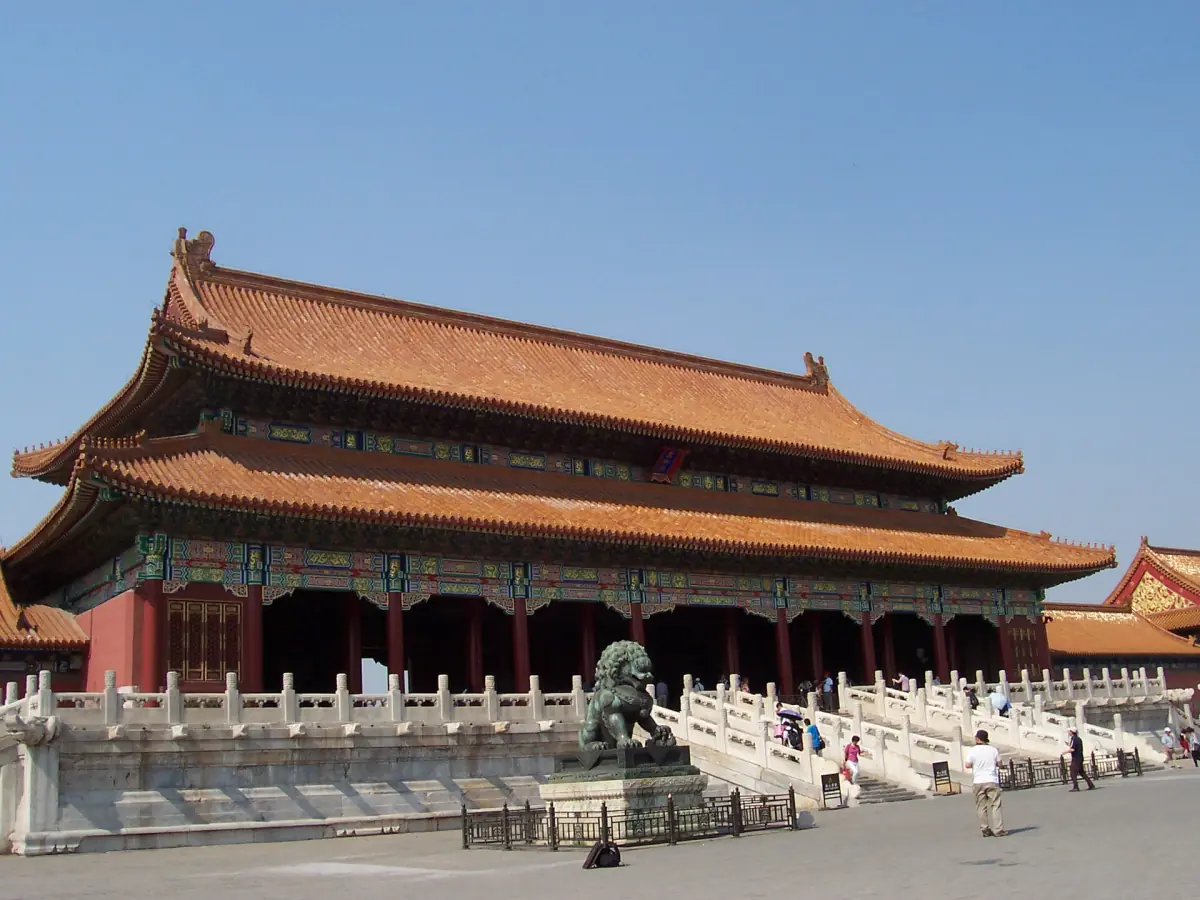
This is the largest and most important of the ceremonial halls. It was used for the great state occasions: the enthronement of an emperor, an imperial wedding and the appointment of an empress. It was not a daily workroom of the emperor.
The numbers are large. The hall is 11 bays wide and 5 deep, with a floor area of 2,377 square meters. It is 26.92 m (88 ft) high, or 35.05 m (115 ft) counted from the base of the terrace.
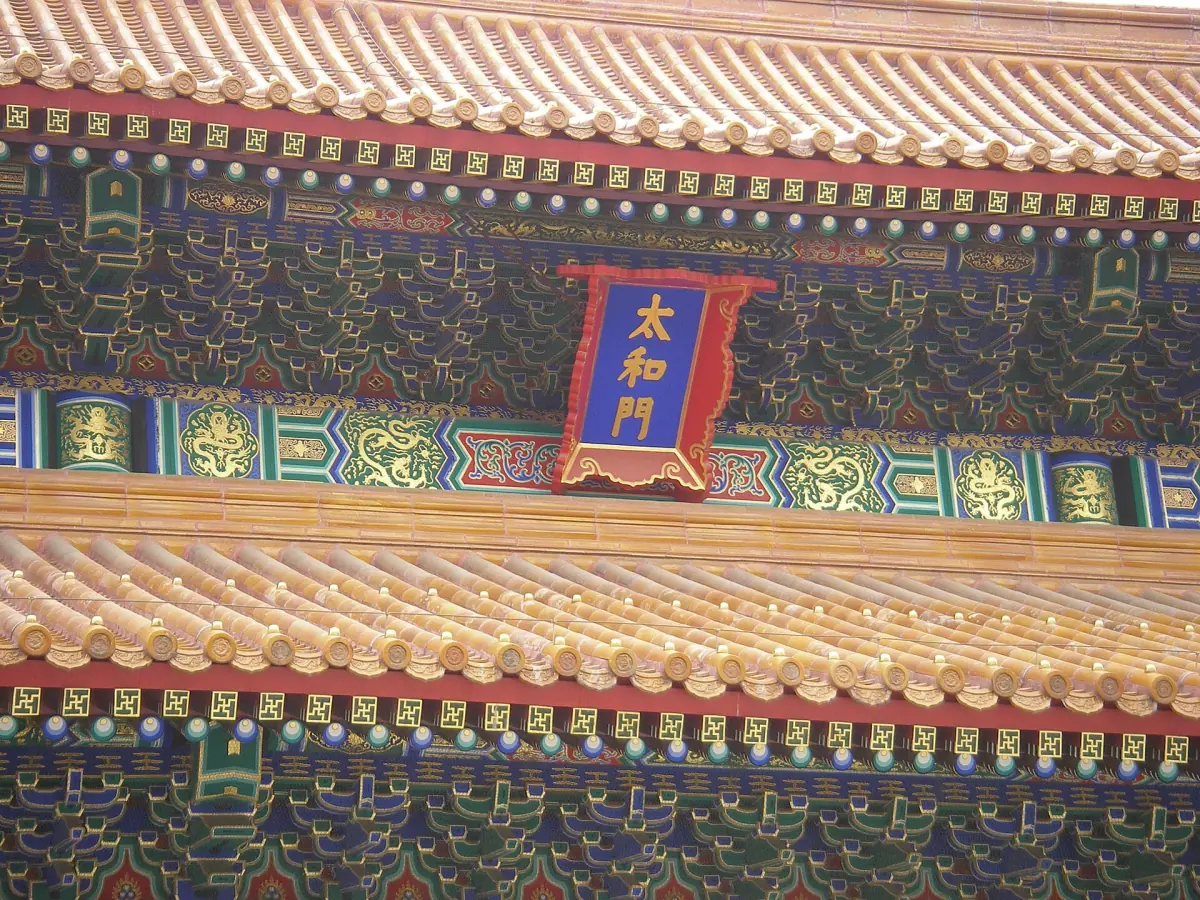
It has a double hip roof, bracket sets called dougong under the eaves and gilded dragon ornaments. Ten roof beasts sit at the corners. The terrace underneath has 3 marble levels, and dragon heads on it serve as water outlets.
The first hall dates from 1420. It burned down several times and was rebuilt each time. The present building goes back to the rebuilding of 1695, a project that took about two years.
What to look for
Details you can see from the courtyards.
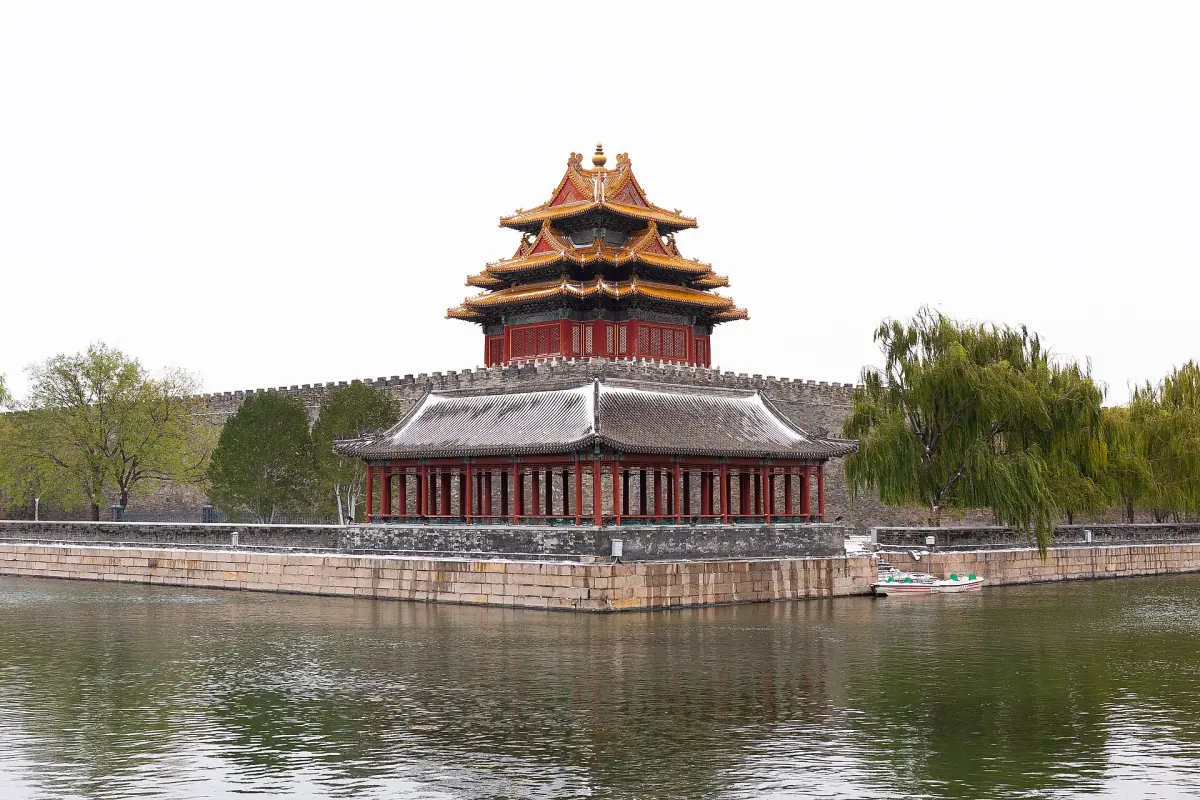
Yellow roofs, red walls
The roofs are described as yellow and the walls as vermilion. That does not mean that every roof is gilded or covered in solid gold. The museum describes the colors, not the material of each roof.
Roof beasts and brackets
Look up at the corners of the Hall of Supreme Harmony. It has ten roof beasts there, and under the eaves you can see the layered bracket sets called dougong.
Marble terrace
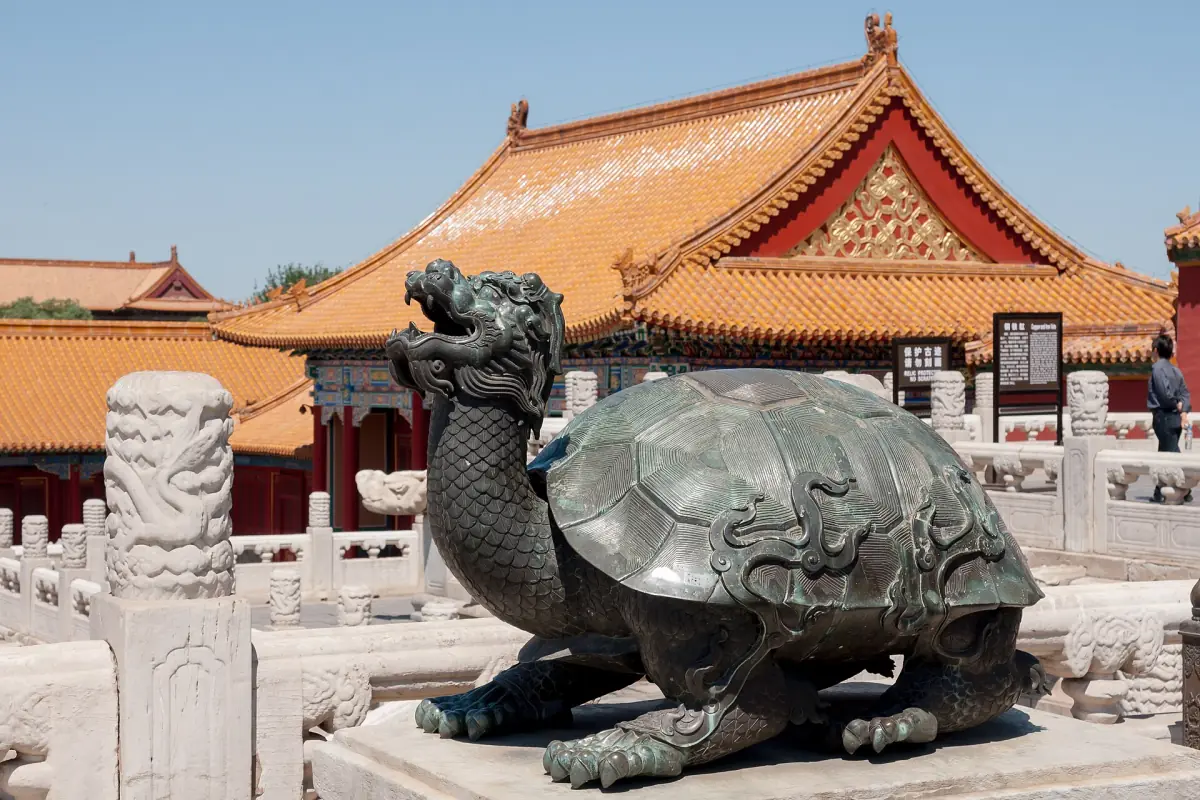
The Hall of Supreme Harmony stands on a terrace of 3 marble levels. Dragon heads on it serve as water outlets, and you can spot them from the courtyard.
The gates
The Meridian Gate has 3 passages at the front and 2 at the sides, 5 in total, on a base 12 m (39 ft) high. The central way through it was historically for the emperor, with two named exceptions.
Meridian Gate guide →The inner court and the garden
The tone changes behind the great halls.
The Palace of Heavenly Purity, the Hall of Union and the Palace of Earthly Tranquility form the inner axis. The Palace of Heavenly Purity matters for the history of the museum, because its front courtyard was the setting for the opening ceremony in 1925. Behind the three buildings lies the Imperial Garden, and the eastern and western palaces stand to the sides.
Many of these side palaces hold galleries or are closed for conservation. Wuying Dian has been closed since 19 October 2026, and Yanxi Gong was closed from 1 September to 31 October 2026, with the reopening announced for 1 November 2026. A construction barrier was announced for the Gate of Supreme Harmony area from 3 August 2026.
Gates on the approach
The palace gate is not the first gate you reach.
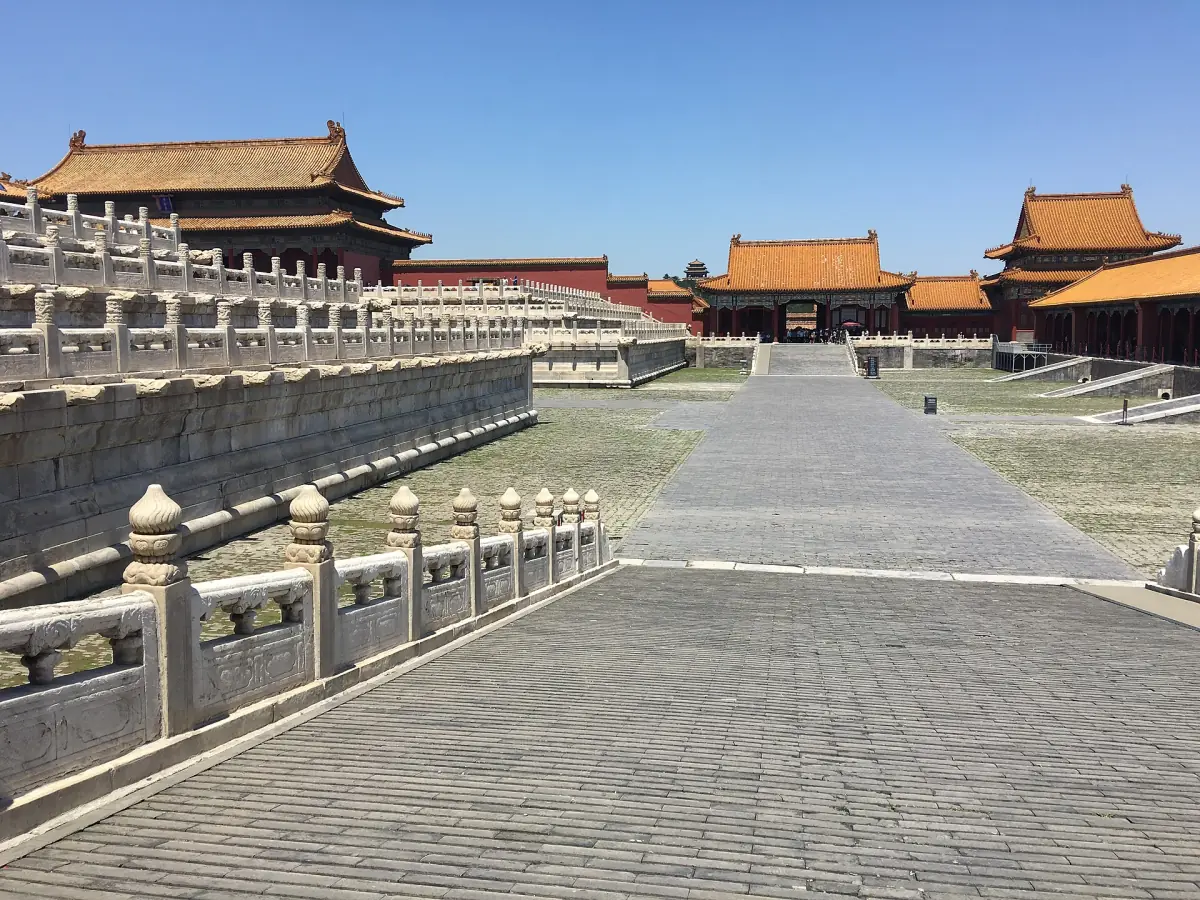
The historic order of the gates is Tiananmen, Duanmen, Wumen, Taihemen and Qianqingmen. Tiananmen and Duanmen lie on the approach, outside the palace. The Meridian Gate (Wumen) is the real gate of the palace, and today it is the only entrance for visitors.
Shenwumen in the north and Donghuamen in the east serve as exits. The route page and the Meridian Gate page explain how to get from the street to the first ticket check.
Forbidden City architecture: frequently asked questions
What is the most important building?
The Hall of Supreme Harmony (Taihedian), the largest of the three outer halls. It was the setting for the major state ceremonies such as the enthronement of an emperor.
Why is the palace built on a north to south axis?
The plan is symmetrical along that axis. The outer court in the south served ceremony and display, and the inner court in the north served court life.
Are all the roofs gilded?
No. The roofs are yellow and the walls vermilion, but not every roof is covered in gold. Gilding appears on ornaments such as the dragon decoration on the Hall of Supreme Harmony.
What do the hall names mean?
The three great halls of the outer court all carry the word harmony: Supreme, Central and Preserving. In Pinyin they are Taihedian, Zhonghedian and Baohedian.
Can I go inside the great halls?
Some areas are closed from time to time, and an old room description does not show what is open today. Check the current notices before you go, and see the route page for the closures of autumn 2026.